
Josh's Story
Survivor Testimony

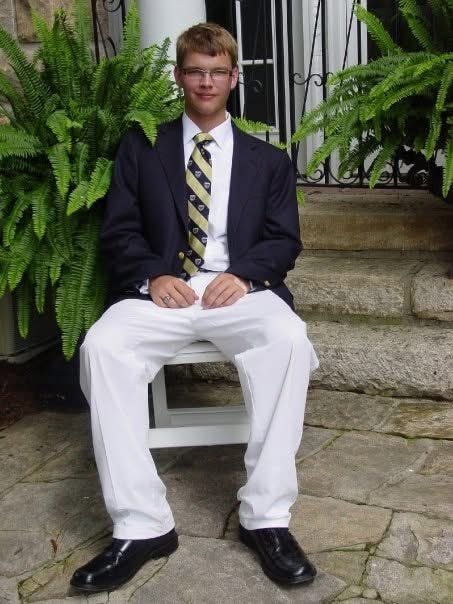
In December 2007, my parents told me that I was going to go to a four-week Outward Bound program for teens, complete with zip lining, camping, and adventure. I am an Eagle Scout, so this sort of outdoor activity appealed to me. After my parents left, I was strip searched. It was my first time, but far from my last.
I was at Second Nature Blue Ridge, a wilderness therapy program in Clayton, Georgia, for seven weeks. We had no tents; each participant was given a tarp that we would use to construct a shelter each night. The weather was brutally cold. Many nights would get into the single digits or below zero. Many mornings I would wake to find my jacket frozen into a solid brick.
In 2007, Georgia was in the middle of a long-running drought, so the entire region was on a fire ban for the vast majority of the time I was in the program. When we were allowed fire, we had to create it ourselves with bow drills. Most of the time, any heat we had would come from hot water in our water bottles. Our staff had propane stoves to cook for themselves while the students often had cold, dry ramen or raw beans and rice softened in creek water.
The “therapy” that was on offer consisted of irregular meetings with a man who gave us assignments like “draw a perfect circle.” The real assignment was trying to divine what lesson the activity was supposed to teach you. I spent weeks trying to convince my therapist that I understood that there was no such thing as perfect. The actual lesson? You just had to ask for help. Before wilderness therapy, I was happy to ask for help.
Another critical part of wilderness therapy was the accountability letter. This would actually become a recurring theme during my journey. My therapist instructed me to write a letter to my parents explaining all of the bad stuff I had done. I told the truth. I had been angry. I had gotten into fights with bullies. I had yelled at my mom and dad. I was impulsive and I swore and I listened to loud music. In short, I was a teenager.
My therapist read the letter and told me to redo it. I wasn’t being honest. So I wracked my brain looking for anything else I could add to it. Multiple times we went back and forth. He told me he knew I had been drinking, having sex, doing drugs. It wasn’t until I lied that they determined I was telling the truth.
This problem is endemic in the troubled teen industry. Because the industry only works if it is bringing in more and more victims, we see this incredible scope creep. What was originally intended to help hardcore drug addicts and true juvenile delinquents was expanded until the people feeding kids into this machine were pathologizing normal teenage behavior.
These letters, which all participants in these programs are required to write, are then used to convince the parents that their kids are dangerously out of control and they should be sent to another program. On February 14, my parents picked me up from Second Nature Blue Ridge and drove me to the Carlbrook School in South Boston, Virginia.
I’ll never forget my first day. I was taken on my tour of the campus and informed that I was going to be on bans with all students in the Lower School part of the program. Bans were a sort of communication restriction. When on bans with a person, you could not speak with them, make eye contact with them, sit near them, or make any acknowledgement of their existence.
I went to the bathroom and greeted someone who I was told was in my peer group. He replied “I’m on bans.” I laughed and introduced myself. I’ll never forget the fear in his eyes when he repeated “I’m on bans” and rushed out of the bathroom. I had assumed that the rules would be followed in front of adults and then disregarded when alone.
How wrong I was.
The most insidious part of these programs is that they are exceptionally talented at population control. The most effective way to manage a population is to have the population manage itself. Your peers were often the most vicious enforcers of the rules. You would disclose details of your life and your peers would find the cruelest time possible to twist those disclosures into attacks. We were bred into the program’s attack dogs, foaming at the mouth to tear into one another.
People that I trusted and loved at that program have said by far the worst things to me that I’ve ever heard. Some of this “feedback” has stuck with me and will echo in my mind for the rest of my life.
And yet, I will never blame the other students for anything they did. We were doing anything and everything we could to get by. The cruelty was a way to keep attention off of you. It was performance theater. It was survival. And I won’t begrudge any of my peers for surviving that place. Goodness knows so many of us didn’t survive.
At some point, I will write about my time at Carlbrook in real depth, complete with interviews with people who attended the program with me. But today is not that day. I will end this portion of my story by saying this. I came out of Carlbrook changed. What I went through there was not normal. It was traumatic. But sharing my story has helped me begin to heal. I would encourage any other survivors to do the same, in their own time. This site will always have a place for survivor testimonies. If you would like to add yours to the list, please get in touch.